
Social Media and The Digital Divide

Contents

Introduction

In a previous discussion, one of the obstacles preventing social media from affecting a positive influence on social capital was the Digital Divide. The problem of course is that like many singular issues, the digital divide is itself made up of multiple caveats.

Article

Note: The article posted for discussion was offline at time of writing.

Discussion

Physical Connection

Connected

This is the most obvious – if you don’t have a connection, you aren’t online. As cited by InternetLiveStats.com approximately 40% of the world’s population is online. This status is meant to sound impressive and it is – but viewed from the opposite angle, that means 60% of the population is NOT online.

Semi-Connected

Being online does not mean one has a quality or even a consistent connection. The statistic of population online is a binary, and a misleading one at that. After all, intermittent and or poor access is still “online”. There is little quantitative data on connection quality, but speculative heuristics paint a bleak picture for most of the 40% who have a connection at all. Only the first world – and not even all of that – enjoys a full fast connection.

Connection quality may sound like more of an annoyance than a real problem, but perspective applies. What we call a poor connection, most of the world calls unimaginable. Furthermore, most online content is designed and built by the very entities with the best connections. This includes government sites, information sources, non-profit organizations, and of course most social media applications.

End result is that as the first world moves more and more of its basic commerce and social interaction online – the rest of the world actually loses access rather than gaining as is a common assumption.

Linguistics

Another obvious issue. English is the language of business. Unfortunately though English is the third largest language by number of speakers – that still leaves most of the world behind a vast and for the moment virtually impenetrable wall of non-communication. As is often the case, it is the world’s poor yet again at the greatest disadvantage, for they are more likely to be native speakers of more obscure dialects, and the least able to obtain access to English education.

As communication goes both ways, native English speakers are often no more well equipped than their non occidental counterparts to deal with a linguistic divide, and many simply have no wish to.

Education

We love to joke about how inept our progenitors are when it comes to online savvy. The classic story of some random grandmother being preyed upon by schemers, scammers, and spammers is more prevalent than ever.

Try to imagine what happen if grandmother wasn’t a first world denizen with access to contemporary education, a modern connection, and the primary language of online communication. Now face the reality – that is exactly the situation most of our world happens resides in.

Online savvy goes well beyond dodging malefactors. The simple act of searching for information is a skill we take for granted. What about typing? Maintaining software? Or for that matter, hardware. There is simply more to getting online than having a neighborhood connection, and for the people who need it the most, it is these skills we consider perfunctory that are the domain of greatest privilege.

Hope

Logistical challenges of bringing the world online at all, let alone at a quality approaching that we in the first enjoy, is both astronomical and growing. Fortunately several entities have risen to take on this challenge. See below for a few in action.

 

Mouse Underfoot – Social Media Vs. Social Capitol II

Contents

Introduction

In this preceding article I’d spoke of some reasons why Social Media acts as a detriment to social capital. However, there are several advantages social media offers over traditional media to the engaged citizen.

Two major hypotheses have been postulated in regards to social media vs. social capital:

  • As social media proliferation increases, the balance of social capital decreases.
  • As social media proliferation increases, the balance of social capital increases.


As an alternative to these diametrically opposed viewpoints, I would like to propose a third hypothesis:

As social media proliferation increases, the balance of social capital remains constant.

In support, I have already offered points toward social media decreasing social capital. Let us now discuss some of the means by which social media can counteract its own negative effect.

Discussion

Financial Access

An obvious advantage social media offers is potential cost effectiveness. Most social media applications are free to use, offering a powerful tool with cost measured only in time vested.

Furthermore, social media also offers a point of income. Via specific fundraising apps like Kickstarter or gofundme.com or direct fundraising campaigns, citizens and organizations have access to potential fund sources that simply did not exist less than a decade prior.

Global Society

Social media has yet to break down cultural, linguistic, and accessibility barriers, but it’s fair to say physical borders are approaching irrelevance. With a few clicks, one can can communicate with peers and strangers alike from around the world. The simple logistics of organizing a real world meeting is now no more difficult than clicking on a calendar drop-down. And though my previous article made a point of only 40% of the world being online at all, that’s still billions individuals that were just not accessible at all to the average citizen of ten years ago.

Edutainment

Wasn’t this cited as a detriment? Indeed it can be and thanks to Sturgeons Law usually is. That said, one cannot blame the hammer for poor construction. Making informational topics fun and is not a new idea – but social media gives us the power to do so quickly and easily.

Describing how a benefit project to relief victims can be fun and beneficial to society is one thing. Posting a video showing people working together, becoming potential lifelong friends, and the resulting work they’ve done is quite another thing. Only social media gives this kind of power to the average citizen.

Conclusion

It’s not fair to say that I have proven my hypothesis, because I haven’t. There are dozens of points still to discuss, and a lack of hard data for analysis. Even so, on a personal level I believe there is currently a balance. We are no better or worse off in totality – the methodology is just different.

If we want to tip the balance positively, it may help to think of social media for what it is. A tool. Social media for its own sake is worse than useless – used wrong it can quickly escalate to being one of society’s major challenges. But when taken for what it is, a vector, a tool, then it is can be the ultimate trump card toward bringing the world together as never before.

Elephant In The Room – Social Media vs. Social Capital

Contents

Introduction

I’ve minced no words in my pessimistic view toward the “power” of social media. To outright repeat myself – I believe the reach and influence of social media, at least in the modern sense is overstated. Social media is by and large a new term, but NOT a new phenomenon. I would argue in fact, that it is not social diversification that has taken place within the last decade, but homogenization – that is to say, the social sphere has compressed itself into a series of internet based applications.

The potential of our public social sphere’s continuous migration into the virtual world is enormous, to the point it defies definition. Unfortunately, potential is NOT power. Until certain issues are resolved, there remains a tenuous balance between the advantages and detriments of social media to social capital. Certainly we cannot hope to tackle even a portion within one discussion, but we can at least the opening gambit.

Discussion

Normally my format of choice is to ask and answer my own pair of questions. For this discussion, let’s instead highlight some specific points and try to take them on piecemeal.

Cyberbalkanization

As defined by Techopedia:

Cyberbalkanization is the segregation of the Internet into smaller groups with similar interests, to a degree that they show a narrow-minded approach to outsiders or those with contradictory views. While the Internet has largely been credited for broadening discussion, it also can serve as a means of bringing together fringe groups with intolerant viewpoints. So, while the Internet has contributed to globalization and information exchange, it also may be used to foster discrimination.

In so many words, it’s human nature. We tend to seek out those with similar opinions for validation and comfort. However, with the fore mentioned homogenization of our information sources into a few small (and controllable) outlets, there is a dangerous precedent of reducing what we know into what we want to know.

Digital Divide

It may shock millennials, Gen-Xers, and perhaps a few Baby Boomers too, but the majority of the world’s population is NOT online. At all. Forget Facebook, Tumbler, and the rest – according to InternetLiveStats.com over 60% of the world populace has yet to experience the musical medley of a dial up modem tone.

It’s simple math – the more our world relies upon online sources of information and commerce, the fewer humans have access to it.

All this only considers having a physical connection. A GOOD connection, basic know how, technology education, online social savvy (cyber street smarts if you will), and linguistic barriers are all obstacles far more difficult to surmount than stringing a bit of fiber optic into third world neighborhoods.

Edutainment

Be honest – how many of you log into your favorite social media to get world news and reports. Be honest again – if you DID log in for education, how many of you wound up watching random videos, looking at friend’s photos, or succumbed to some other distraction?

Human nature strikes again. Combined with Cyberbalkanization, the ratio of frivolous to informative activity is arguably decreasing. End result is an uneducated but highly opinionated populate. If that combination sounds dangerous – it is.

Pseudo Participation

Perhaps better termed “Click Participation”. You will not find this point in our readings as it is my own. In this article among others I have argued a serious degradation to social capital is the self delusion of participation.

It is simply too simple and easy to fool one’s self into a sense of engagement by taking actions online that by and large have absolutely no real effect. An obvious example would be clicking like or posting an offhand comment about a post you agree or sympathize with. More and more specific discussion can be found here, here, and here.


Improving Social Capital

Contents

Introduction

Establishing the concept of social capital is one thing, actually doing something about it is quite another. In a previous article, I argued that engagement is the true key to Social Capital. Let us now address the minutia.

Questions

Q1 – What is engagement?

I’ll admit asking this mostly so I can answer it. To truly gain social capital, I argue physical action must accompany the intent. Clicking like on someone’s post about thinking of disaster victims does nothing to help. Donating to the relief effort does. Or if you do not have the financial resources, showing up and providing physical labor. If that’s not possible, just the simple act of rolling up one’s sleeves and giving a bit of blood makes an actual world affecting contribution.

Similar principles apply to the body politic. What is the difference between posting snarky memes and voting? One of them has an infinitesimal effect on the world, and the other is a snarky quote.

Q2 – How To Engage Using Social Media?

If likes, +1s, and pictures don’t help engage, then what good is social media? Plenty of course. Well written discourse can attract the right kind of attention and raise awareness. Social media groups can be used to coordinate real world efforts. Real time data from ground zero of a project can encourage and cajole.

Simply put, social media has thus far proven to be highly detrimental toward overall social capital. Fortunately in the right hands, it is potentially one of, if not the most powerful tool in the engaged citizen’s arsenal.

PHP Chronofix

PHP

Contents

Introduction

This self-contained library is intended to aid in parsing dates and time values regardless of incoming format, and output the result to a uniform format of choice.

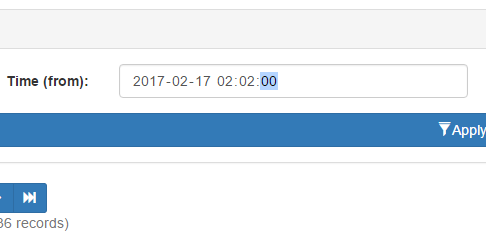
The simple fact is that client side inputs are notoriously unreliable. Even when enforcing inputs to choose or sanitize dates, you may not end up with uniform results across browsers. Or even the SAME browser. Google Chrome for instance, will send a different format depending upon seconds input. Even if you enforce seconds using the step attribute, Chrome will not send seconds as part of the date time string if the user chooses a seconds value of 00.

Unless you choose a value of 01 or greater, Chrome simply won’t include seconds.

However, should you choose a seconds value of 01 or more, then Chrome WILL include the seconds when posting. Same browser. Same version. Same field attributes. Yet entirely different formats depending on perfectly valid user inputs.

You could choose to use text fields and invoke heavy JavaScript date/time pickers, but then you harm the mobile experience, where seamless date choosing is already implemented. If you choose a dynamic solution that looks for support of date time fields, then you regain the mobile experience, but you’re right back to dealing with unreliable formatting.

In a nutshell, if you don’t perform server side validation, you may wind up with undefined behavior from whatever code relies on the input. Databases are particularly finicky. Go ahead and send client side dates directly to an RDMS. Your results will be the same as Forrest Gump’s chocolate box.

Unfortunately, most forms of server side validation are themselves rather persnickety. In the above example, a validator expecting seconds will reject input from Chrome, and several mobile browsers as well. This is where my date and time library comes into play. By leveraging a layered approach and PHP’s string to time, we can accept most any valid time string, verify it, and output in a single uniform format for use.

Use

Simple – Object is initialized with default settings:

// Initialize object with default settings.
$dc_time 		= new dc\Chronofix();

Advanced – Initializing a settings object first, and applying it to the main object.

// Initialize settings object, and use it
// to set date format to Year-Month-Day only.
$dc_time_settings = new dc\Config()
(); $dc_time_settings->set_format('Y-m-d'); // Initialize time library with settings. $dc_time = new dc\Chronofix($dc_time_settings); 

Once initialized the following functions are exposed. All examples assume default settings.

Settings Object

Again be aware settings are entirely optional.

echo $settings->get_format();
// Outputs Y-m-d H:i:s

Returns the format string currently in use.

$string = 'Y-m-d H:i:s';

$settings->set_format($string);

Replaces format in use with $string.

Time Object

$object = $time->get_settings();

Returns a reference to settings object in use by time object. By accessing the current settings object, you can modify settings at runtime.

echo $time->get_time();

// Outputs 2017-02-15 12:00:00

Returns the current date/time value as a string.

$string = '2017-02-15 12:00:00';

echo $time->is_valid($string);

// Outputs TRUE if valid, or FALSE.

For internal use, but exposed for possible utility purposes. Evaluates $string against current date/time format. If the formats match, TRUE is returned. Otherwise FALSE is returned.

echo $time->sanitize();

// Outputs 2017-02-15 12:00:00

Evaluates the current date/time value and attempts to convert its format to the current format setting. Leverages a combination of php’s strtotime and date object to handle nearly any format of dates and times. Outputs newly formatted date/time string, or NULL on failure.

$object = new dc\Config();

$time->set_settings($object);

Replaces current settings object with $object.

$string = '2017-02-15 12:00:00';

$time->set_time($string);

Replaces the current date/time string with $string. You will need to do this before performing any other operations.

Source

Full source available on Github.

Social Capitol And Social Media

Contents

Introduction

In the last century we have witnessed a gradual but exponential change in the media consumption habits of society. In the first world even those of lesser means possess fingertip access to the sum of public domain human knowledge and entertainment – all distilled through a twelve centimeter array of light emitting diodes. Of course resolving whether such distillation results in a net positive or detriment would be a debate both furious and never ending.

Questions

Q1 – What IS social capital?

The Webster definition of social capital reads as follows:

the networks of relationships among people who live and work in a particular society, enabling that society to function effectively.

So then, social capital is a network. But how exactly does a network enable a society to function effectively. If individuals are only engaged in self promotion or gain, an oft cited pitfall of social media, how does society benefit? Or does the ability to directly network through Social Media offset the “me” factor enough to actually increase social capital?

Q2 – What is the key to social capital?

Theoretically if social capital is a network, then networking is the key. This is I diverge from Mr. Webster, Dr. Nah, and most of my contemporaries. I would maintain the true key to social capital is engagement. Without taking some action to affect some real change in the physical or even virtual world, all the networking in the world is of no use.

Donations And The Social Sphere

Contents

Introduction

One of the most important aspects of non profit initiatives is fundraising. As with many other real world activities, social media has disrupted the paradigm for conducting daily business. Let us discuss how to make this disruption work positively.

Articles

Questions

Q1 – How Has The Giving Scope Changed?

As if it wasn’t obvious in the general world sphere, the Benchmark article makes clear that fundraising targets are migrating from static media (email, websites) to social media. This provides both challenges and opportunities for organizations relying on upon public generosity. No longer can one reliably send out bulk emails and expect dependable results. However, while news has always been instantly available – now it is instantly available on a personal level. This kind of “touch it, feel it” illusion aspect of social media may prompt public response in a way that “special reports” on the corner cafe TV never could.

Q2 – How to Leverage Social Media As Fundraising Tool.

As above, social media has already begun to disrupt the traditional email fundraising model – itself a fairly recent disruption of ring downs, snail mail, and door to door. In a way, part of the work has already been done – there is all but a certain chance whatever cause one wishes to take part in already has an operating interest group. Unfortunately, this also means the possible issue of competing for time and resources. Additionally, while previous generational methods are gradually being supplanted, they are still far too relevant and important to ignore. The savvy fund-raising manager will need to find a way to mix public empathy toward their cause with multiple social outlets, and traditional methods – all in a way that is cost and time effective.

Dynamic Stored Procedure Call Generation

PHP

Scripting experiment. Inspector Blair page layout is currently static code. I would like to upgrade to a content managed layout. One of the first challenges is overcoming the diverse array of forms and subsequent data calls. Dynamic queries are NOT acceptable. Instead I’ll need to find a way to create dynamic inputs for stored procedures that can be driven from a forms database.

This experiment was to test a simple array generator. Normally saving to the database is handled by a set of class calls as in this excerpt:

case RECORD_NAV_COMMANDS::SAVE:
	
	// Stop errors in case someone tries a direct command link.
	if($obj_navigation_rec->get_command() != RECORD_NAV_COMMANDS::SAVE) break;
							
	// Save the record. Saving main record is straight forward. We’ll run the populate method on our 
	// main data object which will gather up post values. Then we can run a query to merge the values into 
	// database table. We’ll then get the id from saved record (since we are using a surrogate key, the ID
	// should remain static unless this is a brand new record). 
	
	// If necessary we will then save any sub records (see each for details).
	
	// Finally, we redirect to the current page using the freshly acquired id. That will ensure we have 
	// always an up to date ID for our forms and navigation system.			

	// Populate the object from post values.			
	$_main_data->populate_from_request();
	
	// --Sub data: Role.
	$_obj_data_sub_request = new class_account_role_data();
	$_obj_data_sub_request->populate_from_request();

	// Let's get account info from the active directory system. We'll need to put
	// names int our own database so we can control ordering of output.
	$account_lookup = new class_access_lookup();
	$account_lookup->lookup($_main_data->get_account());

	// Call update stored procedure.
	$query->set_sql('{call account_update(@id			= ?,
											@log_update_by	= ?, 
											@log_update_ip 	= ?,										 
											@account 		= ?,
											@department 	= ?,
											@details		= ?,
											@name_f			= ?,
											@name_l			= ?,
											@name_m			= ?,
											@sub_role_xml	= ?)}');
											
	$params = array(array('<root><row id="'.$_main_data->get_id().'"/></root>', 		SQLSRV_PARAM_IN),
				array($access_obj->get_id(), 				SQLSRV_PARAM_IN),
				array($access_obj->get_ip(), 			SQLSRV_PARAM_IN),
				array($_main_data->get_account(), 		SQLSRV_PARAM_IN),						
				array($_main_data->get_department(),	SQLSRV_PARAM_IN),						
				array($_main_data->get_details(), 		SQLSRV_PARAM_IN),
				array($account_lookup->get_account_data()->get_name_f(), SQLSRV_PARAM_IN),
				array($account_lookup->get_account_data()->get_name_l(), SQLSRV_PARAM_IN),
				array($account_lookup->get_account_data()->get_name_m(), SQLSRV_PARAM_IN),
				array($_obj_data_sub_request->xml(), 	SQLSRV_PARAM_IN));
	
	//var_dump($params);
	//exit;
	
	$query->set_params($params);			
	$query->query();
	
	// Repopulate main data object with results from merge query.
	$query->get_line_params()->set_class_name('blair_class_account_data');
	$_main_data = $query->get_line_object();
	
	// Now that save operation has completed, reload page using ID from
	// database. This ensures the ID is always up to date, even with a new
	// or copied record.
	header('Location: '.$_SERVER['PHP_SELF'].'?id='.$_main_data->get_id());
	
	break;


Before we can begin to control the above calls dynamically, we’ll need to break the call down and see if we can assemble the sql string. Here we will concentrate on building the SQL string.

The form parts and column names they send data too will likely be stored in a sub-table of the forms database, and output as a linked list. We need to use those column names in a call string for sending or retrieving data. This simple experiment uses a keyed array to simulate the list we might get and see if we can concatenate a usable stored procedure call string.

$_main_data->populate_from_request();
            
// --Sub data: Role.
$_obj_data_sub_request = new class_account_role_data();
$_obj_data_sub_request->populate_from_request();

// Let's get account info from the active directory system. We'll need to put
// names int our own database so we can control ordering of output.
$account_lookup = new class_access_lookup();
$account_lookup->lookup($_main_data->get_account());

$save_row['id']                = '<root><row id="'.$_main_data->get_id().'"/></root>';
$save_row['log_update_by']    = $access_obj->get_id();
$save_row['log_update_ip']     = $access_obj->get_ip();
$save_row['account']         = $_main_data->get_account();
$save_row['department']        = $_main_data->get_department();
$save_row['name_f']         = $account_lookup->get_account_data()->get_name_f();
$save_row['name_l']         = $account_lookup->get_account_data()->get_name_l();
$save_row['name_m']         = $account_lookup->get_account_data()->get_name_m();    
$save_row['sub_role_xml']     = $_obj_data_sub_request->xml();        

$sql_str = '{call account_update(@';
$sql_str .= implode(' = ?, @', array_keys($save_row));
$sql_str .= ')}';
echo $sql_str;

//

Obviously this alone won’t be enough, but the resulting output looks quite promising:

{call account_update(@id = ?, @log_update_by = ?, @log_update_ip = ?, @account = ?, @department = ?, @name_f = ?, @name_l = ?, @name_m = ?, @sub_role_xml)}


Social Media & The Public Sphere

Contents

Introduction

The concept of a public sphere is hardly new, and certainly predates social media. The very existence of Habermas, J is proof enough, having been published in 1974. But has social media usurped the public sphere?  Or is it just another facet?

Article

  • Habermas, J. (1974). The Public Sphere: An Encyclopedia Article. New

    German Critique, 48-55. (UK Canvas)

  • The Nonprofit Engagement Project (NEP): Group Selection (Feb 9) (UK Canvas)

Question

Q1 – Contrast the public sphere vs. the social sphere.

Although this is my own question, I believe that ultimately there is very little contrast between social spheres and the public sphere. The public will acquire and consume information from social spheres at will, even (and often especially if) the originator wishes to keep their content under control.

Q2 – How to leverage the blending of social and public spheres.

If we can assume social networking is a key to the public sphere, then we have an easy access to the consciousness of John Q., if only for fleeting moments. The work of “getting attention” is already done. Instead, it is quality of message that must set us apart to garner force behind our cause, in whatever form it might manifest.

Selecting Charitable Initiatives

Contents

Introduction

Social media brings much more than the logistics of organization to charitable initiatives. It is now possible with just a few clicks to research and evaluate any group or initiative on instant notice.

Articles

Questions

Q1 – Discuss basic aspects of charitable organizations and initiatives.

This is a rather lose topic that is (quite intentionally) better for in class discussion. Each individual will have their own personal criteria on what makes an organization charitable, let alone worthy.

Q2 – Discuss using social media to evaluate worthy charitable initiatives.

This again is a question best used for in class discussion. Frankly I look forward to lobbing it into the room like a proverbial Apple of Discord. Amplifying the diversity of opinion is the infinite variability of information available through social media. Within reason, there is really no one correct way to evaluate an initiative. This is the at once blessing and curse of social media power.