
Sorry, this post is marked as private.
Random records and ruminations by Damon V. Caskey.
Sorry, this post is marked as private.
Sorry, this post is marked as private.
Sorry, this post is marked as private.
Sorry, this post is marked as private.
Sorry, this post is marked as private.

Fellow hobbyists, check this out.
A childhood friend of mine who teaches vocational electric and electronics started his MAME cabinet a while back, and is now nearing completion. What sets it apart from most are the constituents and craftsmanship. I’ve seen plenty of setups that had nice sticks, screens, and whatnot, but the cabinets themselves tend to be a bit thrown together. Not here.
This subject is being constructed ground up with high quality materials, precise cuts, and exquisite attention to detail. Assuming that’s still the case, he has also enlisted yours truly to do the artwork when assembly is complete.
IIRC it’s powered by a solid state terminal with 1080p plasma monitor, but in any case it has hinged component access and pull out drawers for quick swapping.
The downside is quality takes time – but when finished this thing will be a beast. Who’s up for a whoopin’ at Samurai Shodown II?
DC





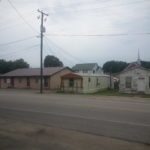
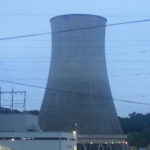
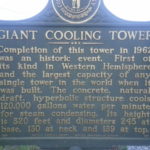
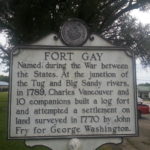
Around ten years ago, I was reading a topo map and decided it would be a good idea to run the length of Route 32 from Morehead (locally known as Christy Creek) to its terminus in Louisa. The unusual hook and touring through a somewhat isolated section of the Little Sandy River Valley had caught my attention.
Louisa itself also had an attraction for me. There lies the head of The Big Sandy River, created from the combined waters of Tug Fork and Levisa Fork – both having their roots deep in the storied peaks of Appalachia coal country. Sighting river features is just an old silly hobby of mine.
So, given a free afternoon, that random idea popped up and off we went. Well evening really. Got a very late start and didn’t even hit the green flag till ~17:00.
End result? Road ran, rivers found, pictures taken, train dodged, and even made a new canine friend in the next state. Not a bad Independence Day ride I’d say. Until next time!
DC



















Integer to GUID conversion notes for Inspector Blair project.
Grouping feature requires GUID in place of Integer values for IDs. I would prefer not to perform this conversion for the following reasons:
While I don’t believe switching to GUID will impact performance to a noticeable degree, I had still hoped to use integers for absolute maximum speed. However, in order to add grouping and integrate it with lists of individuals, GUIDS are an absolute must. Following steps were taken to convert account records to GUID. These same steps may be applied to inspections, system log, autoclaves, and buildings.
UPDATE _sub SET _sub.fk_id = _main.id FROM parent _main, child _sub WHERE _sub.fk_id.old = _main.id_old


Ready to pack.
I have been asked on several occasions what I take out with me for hiking trips, and given that a written checklist always helps prevent forgetting something important, why not kill two birds with one stone and post here?
Everyone will have their own opinion of being over or under-equipped. Personally, I think if you are wearing ten belts, frame pack, and swamp boots with your army BDUs for a walk through the local park you’ve probably been watching too much Discovery Channel. That said, setting foot into the woods without some modicum of emergency preparations is fool hardy at best. Balance is the key.
On achieving that balance, years of direct experience and observation have left me with the opinion that ~20lbs is a good total weight limit for day trips. When distributed properly this affords a person of average stature (yours truly) their full agility. And it’s more than enough to equip yourself for any reasonable emergency or forced overnight stay.
The following is a list of perfunctory gear I take no matter how short or long an excursion. Some of the items I have never and hope to never use but consider an obvious necessity, others have been added or discarded through trial and error. Again, everyone will have a differing viewpoint on what is or is not necessary – this is merely what I find best for my own uses, and is likely to continue evolving.
Multiple layers to allow maximum ranges of temperature and weather tolerance. Inner layers should be skin tight keep out insects, plant seeds and other irritating dander but breathable and wick away moisture.
Sorry, this post is marked as private.

I’d like to say foremost, I actually agree with Ms. DeGeneres on many issues, and for the most part find her hilarious. But when asked to write about the concept of Bic Pens for Women representing ingrained societal misogyny, I found myself having to hide a familiar and festering anger. But the source of my irritation is not what most would assume. Indeed, you might find it is support for women’s causes, not opposition.
As it happens, I was raised by a single mother. But she was not a “mother” – yes I am the most important entity in her life, but raising me was not and is not her identity. For while feeding, sheltering, protecting, and teaching me all of the things she could of courtesy, curiosity, and perseverance, she also worked herself to the bone as part of a growing family business. The latter task she continues to this day. She has been tested in every way a person can be and does not slow down. This she learned from my grandmother, who also built a clothing business even as she acted as the De-facto family matriarch through sheer force of personality. I might add my grandmother, though retired from her own endeavors, now works at my mother’s side and still commands ultimate respect of the family.
In my lifetime I never observed either of these two remarkable women lay claim to any privilege or detriment impressed upon them by society. The simple fact of the matter is they didn’t have time. A sign hangs on the door to my Mother’s office – “She who rows the boat has no time to rock it”. If you are running a race and someone tells you that winning is not possible, do you stop and argue so as to make them right? Or do you ignore the heckling and pass them by on your way to the finish line?
To look beyond my limited experience, one only needs a cursory glance through history. Marie Curie, Amelia Earhart, Eleanor Roosevelt… these women didn’t waste time or energy concerning themselves with barriers. They were too busy ignoring them and adding something to the sum of humanity beyond a bit of noise.
The truth is that Bic For Women is nothing more than another vapid flash in the pan marketing ploy. Yes, I think we can all agree it was a rather bone headed concept, and sure it’s a fine example of everything wrong with the cooperate hive mind. But a tool of oppression? That’s stretching things a bit I think. So it goes when something so meaningless in the grand scheme becomes a point of outrage for feminists, I feel as though my family and others like them are being belittled and insulted. Do women really need that level of support? Is the colloquialism “boys and girls” really worth more than a passing thought? Was an outcry over INK PENS warranted on any level? I’d like to think women are stronger than that – the ones I know and prefer to associate with certainly are.
If I am wrong, then logically the likes of Barbara Streisand, Whoopi Goldberg, and Hillary Clinton have been greater boons for women than Ms. Cuire, Earhart, or Roosevelt. Furthermore it would seem women have no need of feminine hygiene products. Come to think of it, why do men need facial razors? After all, anything marketed toward either sex is yet another sign of a skewed society yes?
To go even further, there are parts of this world where women truly are oppressed. Where education or even showing their faces in public can result in ostracism, torture, rape, or death – sometimes all and not always in the order listed. Yet here in the west we use the energy that might go to these real problems for quibbling about ink pens and maxi pads. Does no one see the shame in this?
Sorry, this post is marked as private.
The cool morning air and dewy grass lend their refreshing aroma to a bucolic scene of rolling hills and nearby buildings of classical architecture – even as traffic from one of Lexington’s busiest asphalt arteries rages only yards away. Sidewalks give a welcome reprieve from wet shoes and occasional mud holes.
Amidst all of this peace comes a piercing cry: “Free tee-shirts!” That’s when wandering eyes are drawn to the booth piled high with shirts and other sundries. But of greater curiosity is the ribbed steel trailer and its strange contents – a couch, computer, posters, pizza, laundry – and not exactly in the cleanest of sorts. In other words, all the trappings of a typical college dorm room.
Why is this oddity sitting on a campus lawn, and what’s with the shirts? Closer inspection (i.e., reading the signs) reveals it all. It is September – Campus Fire Safety Month – declared statewide by the Commonwealth of Kentucky Governor’s Office (Beshear, 2014). Naturally, if you’re a student, this is likely something you didn’t know and probably wouldn’t care about if you did. It is that very sort of apathy the already growing contingent around this trailer hopes to change. Fire trucks roll in, cameras are set, and a podium is assembled while yet again… “FREE TEE-SHIRTS!”
Of course, no matter how loud the call, students are used to tee-shirts, and no amount of crafty slogans or declarations will pierce the fog of youthful apathy. That’s where the dorm room on wheels comes in. Rather than merely explaining fire safety to students – or even showing videos and giving shirts – the UK Safety Community (EHS) has developed a far more visceral method: burning stuff. Nothing draws a crowd like fire, except perhaps the anticipation of fire. All you have to do is stick around and enjoy the show as the dorm room in a box meets its pyro-riffic end.
So what is it we are going to analyze? Burning a bit of furniture is pretty straightforward. A couch is either ash or it isn’t – not a whole lot of debate there. But what about the psychological effect? Does it really make a difference to see a replica dorm room reduced to carbon slag? Will learning about flashover and convective heat really convince a tired co-ed in pajamas – or less – to jump out of bed and into the cold night air when the alarm blares? During finals week?
The UK Fire Marshal’s Office certainly hopes so. According to the Governor’s Fire Safety Month Proclamation, 166 individuals have died in campus fire-related incidents nationwide since January 2000 (Beshear, 2014). The proclamation states:
“It is vital to educate the future generation of our nation about the importance of fire safety behavior in order to reduce the occurrence of fires and the resulting loss of life…” (Beshear, 2014).
The real question is how to deliver that education effectively. The University of Kentucky is by no means without fire safety protocols. A cursory glance at the online Fire Policy List reveals procedures outlined for ADA accommodations, evacuation, electrical wiring, floats, open fire camping, office heaters, stoves, microwaves, vending machines, and more.
Even something as simple as a fire extinguisher is taken seriously. The University employs a dedicated extinguisher specialist whose primary concern is ensuring that every location on campus has a sufficient number of extinguishers – and that those extinguishers are inspected, up to date, and always ready (Caskey, 2014).
Still, do these measures actually affect fire safety? To find out, we look at the numbers. In September 2010, the UK Fire Marshal’s Office launched the Don’t Be an Ash program and began conducting public dorm burn demonstrations to raise awareness. According to the UK Campus Fire Log, from January 1, 2010, to December 31, 2014, there were 1,913 fire incidents reported on campus. Of these, four resulted in injuries. From 2005 to 2009, there were 2,116 incidents – five resulting in injury (Caskey, 2006).
Statistically, incidents decreased by roughly 9.6%, and injuries dropped by 20%. The injury-per-incident rate also improved by about 11.4%. This reduction occurred despite a slight increase in enrollment during the same time period (Blackford, 2013). One might argue the impact is small, but even maintaining a safety baseline while the student population grows is a success. And if even one life is saved, the effort is more than worth it.
Back to that crisp fall morning. The murmurs of curious onlookers now threaten to drown out the educational monologue at the podium and the cries of “Free tee-shirts!” Most attendees can guess what’s about to happen, but few understand the how. That’s exactly what event organizers are counting on: the shocking effect of a deadly phenomenon called “flashover.” Defined by Merriam-Webster as “the sudden spread of flame over an area when it becomes heated to the flash point” (Merriam-Webster, 2015), it’s further illustrated by Greg Williamson in a recorded demonstration (Williamson, 2012). Flashover is a lethal moment where heat ignites everything in the room almost simultaneously. Even well-equipped firefighters stand little chance once flashover has occurred.
But that horrifying moment also makes for an unforgettable lesson. Seeing is believing. Most people expect a fire to build slowly, like logs on a campfire. In reality, a dorm fire starts small – then hits a critical point and erupts into an all-consuming inferno. All of it happens in less time than a commercial break.
Up until now, we’ve focused on the dorm burn. But here’s the real image we want to leave you with:
A smoke alarm blares. It’s three in the morning. You’re tired. Tomorrow is a big day. It’s cold outside and probably wet. Your professor couldn’t care less that you had to get up, and the last three alarms were false. Odds are this one is too. Or there could be a trash can fire next door—harmless now, but in two minutes utterly impassable. Do you wait and gather your clothes and phone before heading out? Do you ignore it entirely? Or do you remember the dorm burn and that instant flashover, and decide the risk isn’t worth it?
If you get out, then the job has been done. If even one life is saved, it was all worth it.
Beshear, S. L. (2014, August 19). Governor’s proclamation: Campus Fire Safety Month. Commonwealth of Kentucky. Retrieved March 8, 2015, from [URL if available]
Caskey, D. V. (2014). Table: dbo.tbl_extinguisher_inspection [Data file]. In J. Ellis, B. Ernest, & R. Harrison (Eds.), UK EHS Extinguisher Inspection Manifest. University of Kentucky. Retrieved March 9, 2015, from [URL if available]
Caskey, D. V. (2006). University of Kentucky Campus Fire Log. (UK Public Safety Dispatch, Ed.). University of Kentucky. Retrieved March 8, 2015, from http://ehs.uky.edu/apps/flashpoint/incident_log.php
Blackford, L. (2013, September 10). University of Kentucky enrollment tops 29,000 for first time. Kentucky.com. Knight Ridder. Retrieved March 8, 2015, from https://www.kentucky.com or article-specific URL
Merriam-Webster. (2015). Flashover – Definition. In Merriam-Webster.com dictionary. Retrieved March 8, 2015, from https://www.merriam-webster.com/dictionary/flashover
Williamson, G. (2012, September 19). Dorm Room Burn [Video]. YouTube. University of Kentucky EHS. Edited by D. V. Caskey. Retrieved March 8, 2015, from https://www.youtube.com/watch?v=nYA2ntW9oNE
Brief Reflection of I’m Not Asian: A Heritage Odyssey
Although it was not the main focus of the article, I personally found one particular bit of wording to be quite poignant:
Unceremoniously, the boy asked, “Are you Asian?”
By use of the the term “unceremoniously” the author, Ms. Kesleyn Potter conveys the power of personal stereotypes in one innocent bit of childish obliviousness. She further reinforces this with her own use of a popular movie that itself relies on many Asian stereotypes (Mulan).
As she further goes on to write, Ms. Kesleyn’s lineage is Hungarian – not even part of the geographic Asian continent. It is only later she discovers the truth of her rich and storied heritage.
I believe this is a clear indication that while they can be amusing and occasionally based in fact, over saturation of such stereotypes can quickly rob us of some of the more beautiful nuances humanity has to offer.
I found it a fascinating experience to listen to the various speeches. Less so because of the content, though that was interesting in itself – but in the delivery. Even the best or worst speaker cannot help but allow bits of themselves to escape in the midst of a presentation. Body language, tone, presence or lack of confidence, these and more tell far more than any PowerPoint on family background ever could. This I believe is doubly so when someone is asked to represent a personal aspect of themselves.
I wasn’t spouting hyperbole in my own when speaking of insatiable curiosity in my own exhibition, and while I am poor with name/faces, I never forget a personality. Though I prefer to work alone (read: hate group assignments with a burning passion), I’ll choose to make lemons into lemonade. It will be a fun exercise to learn more about my classmates and their backgrounds during our upcoming endeavors.
DC
Caskey, Damon V.
Kolf, Emily
2015-02-09
When asked to identify one’s identity in a community space, the first word that probably comes to mind is “nebulous”. To wit, were you to ask X number of individuals to define a community, you’d be likely as not to receive X number of disparate responses. Now ask that same group to identify themselves, and the results are certain to be similar.
I’d call finding an identity to be something like “finding yourself”. And I would then ask, how do you find something that is always in flux? My answer is that you fall back to the process that creates the identity. First, we’ll throw an idea of identity out for discussion. Next, we’ll compare self-identity to activity and occupation. Finally, we’ll see about melding these together into something more concrete and cohesive – perhaps this will answer the question of there really being an identity at all. While we’re at it, perhaps some sense can be made of the pyrograph in progress behind me.
So let us begin with the first point of discussion, the part where I try to tell you who I think I am. If I were to go the route of hobbies and interests, we’d be here all day. I’m a card carrying high functioning ADHD “sufferer” and actually a bit proud of it. As a result of that and general curiosity, my hobby is collecting hobbies. Let’s just say I’m eclectic jack of all trades and leave it at that.
So instead I’ll note what I think is my two most positive aspects. I’m a determined and driven person. I can tell you with confidence that once I set my mind to a task whether it be a local mud run or attaining a PhD, I see it through. This isn’t me telling you I’m unstoppable. Not by any means. It does mean that only success or total failure to the point of no further reprisal are ever acceptable. I can be beaten – but I never lose.
The other trait is curiosity. I live to soak up information, learn new skills, and analyze just about anything I come across. Remember the little kid who takes apart everything just to see how it works? I never grew out of that. Ms. Kolf herself could probably attest to this already when she caught me hungrily eyeballing the esoteric communication system near our class door. Unfortunately, that habit also extends to people, some of whom don’t appreciate my treating them as living cogs to be disseminated.
It’s these “others” that brings us to the second area of discussion, that being self-identity with others and activities. As already mentioned my hobbies and activities are a bit all over the place. Two months prior I traveled to Denver to perform volunteer flood aid. Last night I attended a bi-weekly gymnastics course that I alternate with the UK boxing club. Tonight I’ll be working some on a concept paper discussing an idea of applying four point holographic images and human trance response as a possible conduit to learning. This weekend I’ll be square dancing for Valentine’s Day. The weekend after I’ll assist my family with our jewelry and firearm businesses back in my hometown of Morehead. And when I leave this class, it’s straight to an 11:00 meeting with my supervisor, who happens to be Division Directory for campus Environmental Health and Safety. That’s where I build database and web applications to track pretty much everything to do with safety.
Does this person sound busy? Funny, because I didn’t name half the engagements, and really it’s a light week. I would say, and maybe you agree that it’s really a bit scatterbrained. I DID say I was ADHD and like to stay moving did I not? The constant is no constant.
So now we’ve come to our last point. I’ll keep this one short and simple because I believe that it is. I was raised to eschew any singular concept of identity, and so have chosen a lifestyle of constant stimulation, stress and challenge. I’m not a jock – I just like to play sports. I’m not a nerd – I’m a guy who loves technology, culture and learning. And as is probably obvious, these choices have reflected back to feed my own curiosity in a loop that is a little frenzied, but always fun.
I’m looking at a lot of people here who are probably thinking after saying all that, I must believe I’m pretty special. On that I would implore you to take a look at the video portion of this presentation. Assuming my pyrography skills are not utterly pitiful, you will see that a snowflake has been taking shape while I speak. That snowflake is me. It is utterly unique, ever in flux, and impossible to replicate by any science we are aware of. But it does share certain traits with billions of its brethren. It is a six sided crystalline allotment of dihydrogen monoxide. Which I might add, makes up the physical structure of every person on Earth. Every single one of us, sharing some basic common traits as sentient creatures – but each being nebulous, ever changing. Unique. Delicate, but thus far eternal. I AM special, but no more than any of you. So let me finish by saying, this time of your life where you find yourself? That’s a farce. You can never find what doesn’t really exist. Create yourself instead. You’ll never finish the project, but like me you might have some fun and do a little good along the way.
Sorry, this post is marked as private.
Appeals
Pathos
Ethos
Logos
Karios